
10-Day Casablanca Desert Tour
Experience Morocco from the Atlantic coast to the golden dunes…
View the Tour

Experience the awe of the Sahara. Let the towering, reddish-orange dunes of Erg Chebbi be the backdrop for your magical camel rides and unforgettable nights under a canopy of desert stars.


Merzouga is a small destination in southeastern Morocco beside the Erg Chebbi sand dunes. Known for sunset camel rides, desert camps, changing dune landscapes, and nearby oasis communities, it is one of Morocco’s most rewarding places to experience the Sahara.
Our Merzouga desert tours connect the dunes with Morocco’s cities, mountains, valleys, and historic villages. Browse the itineraries on this page, then use this guide to choose your travel dates, understand the weather, compare accommodation, and plan your time in the region.
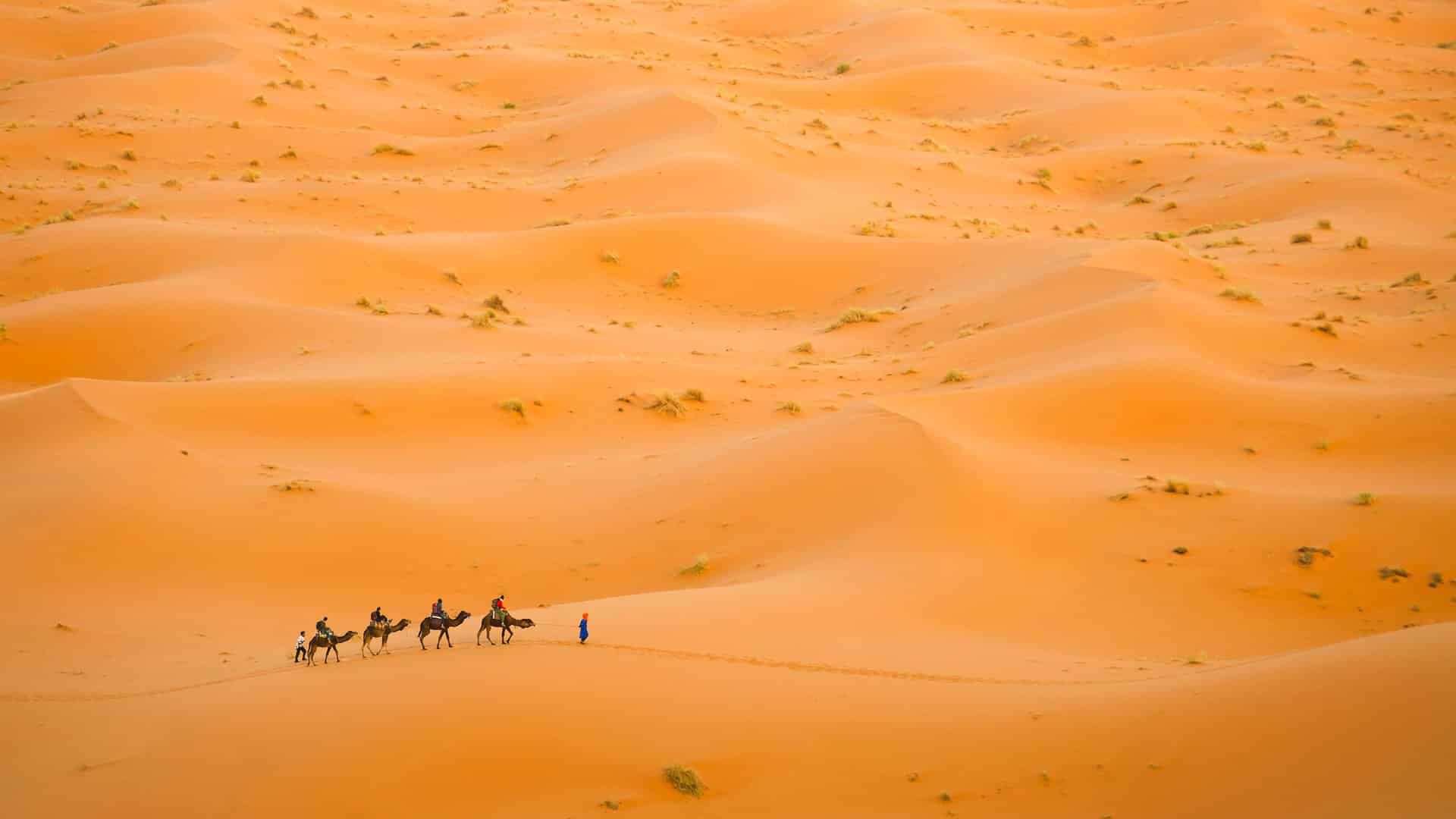
Many travelers arrive with one image in mind: a camel caravan crossing golden sand at sunset.
That moment can be beautiful, but the region deserves more than a photograph. Around Erg Chebbi, you can discover music, oasis agriculture, regional food, fossil craftsmanship, and communities whose lives are connected to the desert.
The most useful planning advice is to give yourself time. Arriving late, sleeping briefly, and leaving immediately after sunrise offers only a small introduction.
If your itinerary allows, spend two nights in the area. You can combine a camp experience with a comfortable guesthouse stay and explore without rushing.
| Planning question | What to know |
|---|---|
| Where is Merzouga? | In southeastern Morocco, near Erg Chebbi |
| What is Erg Chebbi? | A large area of wind-shaped sand dunes beside Merzouga and neighboring settlements |
| What is the main attraction? | The dune landscape, supported by cultural visits and desert experiences |
| How long should you stay? | One night provides an introduction; two nights allow a more relaxed visit |
| When should you visit? | Spring and fall are useful starting choices, with cooler winter options |
| Can you visit from Marrakech in one day? | Merzouga requires a multi-day itinerary from Marrakech |
| Must you ride a camel? | No. Ask about a vehicle transfer and confirm arrangements before booking |
| How are temperatures shown here? | Fahrenheit first, followed by Celsius |

Merzouga is a settlement and travel base. Erg Chebbi is the neighboring dune landscape. The Sahara is the much larger desert region of which this experience forms a part.
This distinction helps when comparing accommodation. A property described as being “in Merzouga” may be in the village, beside the dunes, or at a campsite reached by a separate transfer.
Ask for the exact accommodation location and how you will reach it.
The Moroccan National Tourist Office describes Merzouga as a gateway to the Sahara, with dunes, palm groves, tracks, and the seasonal Dayet Srij lake among the surrounding features. Official Merzouga destination overview
For a first visit combining dune walks, cultural stops, and a camp night, consider March, April, October, or November.
These are planning recommendations rather than a promise of particular conditions. Your comfort depends on the weather during your visit, your activity level, and your accommodation.
Spring offers a useful balance for travelers who want outdoor experiences without midsummer heat.
Temperatures increase substantially as the season progresses. Keep activities flexible and plan longer walks for the cooler parts of the day.
Wind can affect visibility and comfort. A scarf, sunglasses, and a protective bag for your camera or phone are useful additions.
Early fall can still be very hot. October and November are generally more comfortable starting points for travelers who want to walk and spend time outdoors.
Bring layers for evening activities. Sunset does not mean the temperature will remain comfortable throughout the night.
Winter can suit travelers who prefer milder daytime conditions and do not mind colder evenings.
Choose your camp carefully. Ask about bedding, tent heating, hot water, and the distance between your tent and shared facilities.
Do not assume that a camp described as “luxury” has heated bedrooms.
Summer requires careful scheduling and suitable accommodation.
Plan outdoor activities early or late, keep midday free for rest, and confirm whether your room or tent has effective cooling.
For heat-sensitive travelers, a different season is usually the more comfortable choice. Discuss whether a hotel beside the dunes would suit your dates better than a camp night.
The following table shows rounded average daytime highs published for Merzouga. The provider identifies Foreca and Copernicus C3S among its climate sources.
These are climate estimates for planning, not measurements at your chosen camp or a forecast for your travel dates.
| Month | Average daytime high |
|---|---|
| January | 66°F / 19°C |
| February | 70°F / 21°C |
| March | 79°F / 26°C |
| April | 86°F / 30°C |
| May | 93°F / 34°C |
| June | 102°F / 39°C |
| July | 109°F / 43°C |
| August | 108°F / 42°C |
| September | 99°F / 37°C |
| October | 86°F / 30°C |
| November | 75°F / 24°C |
| December | 68°F / 20°C |
Source: Merzouga monthly temperature data.
For nighttime context, the same provider reports average lows around 43°F (6°C) in January and 84°F (29°C) in July. The desert is not cold every night of the year.
Check a location-specific forecast before departure. Rain, wind, and changing track conditions may require adjustments to activities and transfers.
Sunset is one of the most rewarding times to appreciate Erg Chebbi’s changing colors and shadows.
You do not need to climb the highest dune. Choose a viewpoint that suits your walking ability and leave enough time to return comfortably.
Ask your guide how long the walk takes and whether the route involves steep sand. Walking on dunes can be more demanding than walking the same distance on a firm path.
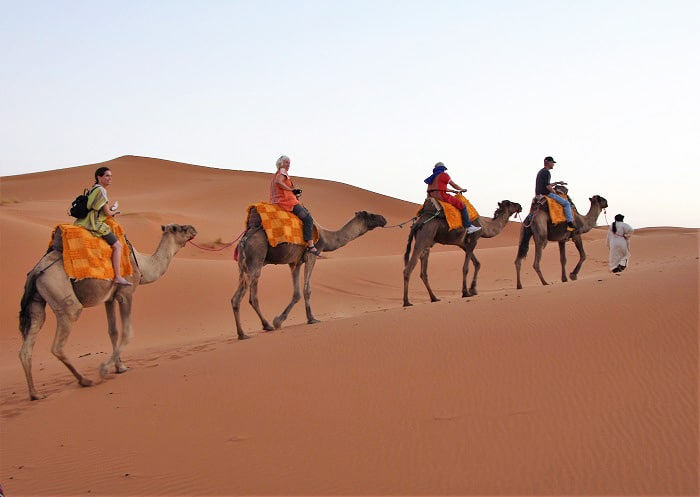
A camel ride offers a slower way to approach the dune landscape.
Before booking, ask about the riding duration, mounting assistance, route, and whether the ride is optional.
Choose an operator who handles animals calmly and responds responsibly to their condition. Tell your organizer if you have concerns about balance, back comfort, or getting on and off.
If you would prefer a vehicle transfer, arrange it in advance.
A camp stay can combine an evening meal, time outside under the sky, and an introduction to local hospitality.
The experience depends on much more than the appearance of the tent. Location, nearby camps, music volume, bedding, bathrooms, and transfer arrangements all affect your stay.
Ask for details before booking rather than relying on the word “luxury.”
Sunrise offers another perspective on the dunes, often with soft light and a different atmosphere from the previous evening.
You can enjoy it from a nearby viewpoint without undertaking a demanding climb.
Confirm the morning schedule with your host. Some travelers prefer sunrise followed by a relaxed breakfast; others need an earlier departure for the next stage of their journey.
After dark, take time away from bright camp lighting if your hosts identify a suitable nearby spot.
Stargazing depends on cloud cover, dust, the moon, and surrounding light. A bright full moon creates a different experience from a dark, moonless evening.
If night photography is a priority, tell your organizer before choosing a camp and travel dates.
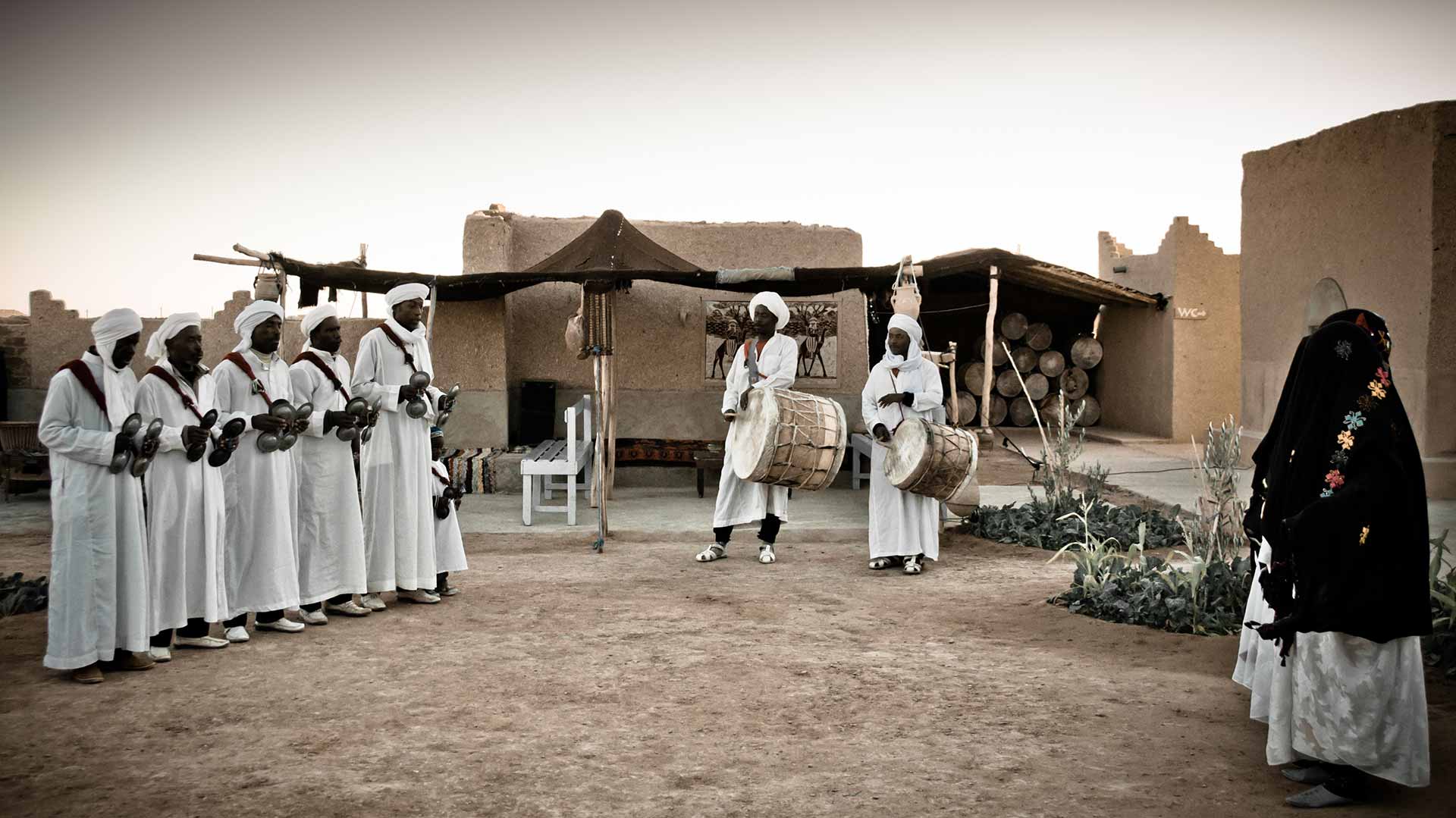
Khamlia, near Merzouga, is known for its Gnawa musical traditions.
Arrange time to listen and learn rather than treating the visit as a quick photo stop. Ask about the performers, instruments, and arrangements for payment or contributions.
Request permission before recording video or taking close photographs. Background on visiting Khamlia
Rissani adds historical and everyday context to a desert trip.
The region is associated with caravan commerce, the heritage of Sijilmassa, and the Alaouite dynasty. A visit can help connect the dune landscape with the movement of people, goods, and ideas across the region.
Ask your guide which market activities are taking place during your visit instead of planning around an unconfirmed schedule. Moroccan National Tourist Office’s desert route overview
Erfoud is associated with fossil-bearing stone and workshops that shape it into decorative and practical objects.
A workshop visit can be interesting if you want to understand the material and the process. Ask which pieces are natural, polished, assembled, or reproduced.
You should feel comfortable visiting without being pressured to purchase. Moroccan National Tourist Office’s nature and adventure guide
Dayet Srij is a seasonal lake near Merzouga.
Its appearance depends on water conditions. Do not expect a permanent lake scene or guaranteed bird sightings.
Ask locally whether a visit is worthwhile during your stay. When water and wildlife are present, observe quietly and avoid disturbing the shoreline. Official Merzouga destination guide
The area around Erg Chebbi includes more than sand: stony plains, tracks, settlements, and cultivated pockets form part of the wider landscape.
A guided vehicle excursion can help explain those contrasts.
Choose the route according to your interests and comfort. Ask how much time involves driving, walking, cultural visits, and optional shopping stops.
Travelers with a particular interest in regional history can ask about Taouz and its rock engravings.
These visits require appropriate local knowledge and current access information. Avoid touching, marking, or removing anything from heritage sites.
The Moroccan National Tourist Office also identifies regional museums and fortified villages as part of the area’s cultural heritage. Regional cultural attractions
Sandboarding can be an enjoyable optional activity, but the climb back up the dune is part of the effort.
Ask about instruction, equipment, suitable slopes, and conditions. Keep the session short if the sand is hot or the climb feels demanding.
There is no need to include every activity. A quiet dune walk may be more rewarding for your travel style.

Compare practical details before comparing photographs.
| Question to ask | Why it matters |
|---|---|
| Where is the camp located? | Views, surrounding activity, and transfer times vary |
| Is the bathroom private and inside the tent? | “Private bathroom” can describe different arrangements |
| Is hot water available? | Availability and supply can vary |
| Is heating or air conditioning provided? | Seasonal comfort depends on actual facilities |
| When is electricity available? | Charging arrangements may be limited |
| How far is the walk from the vehicle? | Deep sand can affect accessibility |
| Is evening music provided, and when does it finish? | Some travelers prioritize entertainment; others prefer quiet |
| Which meals and drinks are included? | Package inclusions differ |
| What happens during unsuitable weather? | You should understand the alternative arrangements |
If reliable connectivity matters, confirm it directly. A general promise of Wi-Fi does not guarantee a strong connection inside your tent.

A camp can suit travelers who want the setting, shared evening atmosphere, and opportunity to spend time outdoors after dark.
Choose it for the experience it actually offers, with clear expectations about facilities and access.
A property beside the dunes may suit travelers who prioritize easy room access, dependable cooling or heating, and more conventional facilities.
You can still arrange sunset, sunrise, and cultural excursions without sleeping at a camp.
With two nights, consider one night at a hotel or guesthouse and one at a camp.
This gives you more flexibility and time to explore the area between arrival and departure.
The road journey from Marrakech is a substantial part of the trip.
A multi-day route can include the Atlas Mountains, Aït Ben Haddou, and Ouarzazate, depending on the itinerary.
For travelers continuing to Fes, explore our 3-Day Marrakech to Fes Desert Tour via Merzouga.
If you need to return to Marrakech, review our 3-Day Merzouga Desert Tour from Marrakech. The final day includes a long return journey, so compare the schedule with your preferred pace.
A journey from Fes can connect mountain and valley landscapes with the desert.
Allow a full travel day and ask how proposed stops affect your arrival time. Reaching the area before the evening transfer is more comfortable than trying to fit too much into the drive.
For travelers beginning in Casablanca, Merzouga usually fits best within a longer Morocco itinerary.
Discuss the overall route first, including your arrival and departure airports, rather than choosing the desert segment in isolation.
Separate your time in Merzouga from the days needed to reach it.
For a shorter Morocco vacation, avoid adding Merzouga without accounting for the journeys on either side.
This sample begins when you reach the area. It does not include the travel days from Marrakech or Fes.
Check into a guesthouse or hotel, rest after the journey, and discuss the next day’s arrangements.
Choose a gentle sunset outing if your arrival time and energy allow.
Arrange a morning excursion around your interests, such as Khamlia, Rissani, or a landscape drive.
Return for lunch and rest. Later, transfer to your selected camp by the method agreed beforehand.
Enjoy dinner and the evening at your own pace.
Watch sunrise if you wish, have breakfast, and allow time to prepare for your onward journey.
Avoid scheduling the morning so tightly that a delayed transfer affects a major connection.
Ask about regional meals as well as familiar Moroccan dishes.
Options may include tagines, couscous, seasonal vegetables, dates, and medfouna, a stuffed bread associated with the Tafilalet region.
Confirm what your camp serves before arrival. For vegetarian meals, ask about broth and cooking ingredients. Explain allergies clearly in advance so the organizer can discuss what the kitchen can accommodate.
Meals at camps often follow a set schedule. If you prefer an early dinner or need a snack before an evening activity, mention it during planning.
Bring:
For winter, pack warmer evening clothing than daytime photographs may suggest. For summer, confirm accommodation cooling before departure.
The desert is a living environment and home to local communities.
Keep litter with you until it can be disposed of properly, use water thoughtfully, and follow local guidance around cultivated land and heritage sites.
Visits to private homes should happen by invitation and with clear arrangements. Ask permission before photographing residents.
If you choose motorized activities, ask about established routes and how the operator avoids disturbing wildlife, homes, and quieter visitors.
The right desert journey gives you time to enjoy the landscape and understand the region around it.
Choose your itinerary according to your travel dates, starting city, preferred comfort, and available time. Tell us whether you would enjoy a camel ride, prefer a vehicle transfer, want a quiet camp, or need a slower pace.
Explore the Merzouga desert tours on this page and contact Gboo Morocco Tours to discuss a route that fits your Moroccan journey.
Merzouga is a settlement and travel base beside Erg Chebbi. Erg Chebbi is the neighboring sand-dune landscape.
March, April, October, and November are useful starting choices for a balanced desert itinerary. Winter can suit travelers who prefer milder days and are prepared for colder evenings.
Published climate estimates put average daytime highs at approximately 109°F (43°C) in July and 108°F (42°C) in August. Individual conditions vary, so plan around a current forecast
No. Ask for a vehicle transfer if you prefer not to ride, and confirm any price difference and walking requirements before booking.
Some may, but the description alone does not confirm it. Ask about your specific tent, operating hours, and power arrangements.
Merzouga requires a multi-day journey from Marrakech. Compare itineraries carefully and account for the driving time.
They can be tailored to a comfortable pace. Discuss vehicle access, walking on sand, bathroom arrangements, room temperature, and rest stops before confirming.
No. Visibility depends on the season, time of night, moon, clouds, dust, and nearby lighting.
No. Merzouga and Erg Chebbi are a different destination from M’Hamid and Erg Chigaga. Compare the overall route and access arrangements before choosing between them.

