
10-Day Casablanca Desert Tour
Experience Morocco from the Atlantic coast to the golden dunes…
From €1,400 per person
View the Tour

Casablanca is Morocco’s largest city and a major Atlantic gateway, known for Hassan II Mosque, oceanfront neighborhoods, Art Deco architecture, and the traditional shopping streets of Habous. It introduces visitors to contemporary Moroccan life alongside important cultural landmarks.
Our Casablanca tours combine city sightseeing with private journeys across Morocco. Explore the itineraries on this page, then use this guide to choose your travel dates, discover the main attractions, and plan a comfortable start to your vacation.




Many travelers arrive in Casablanca and immediately continue elsewhere. Giving the city some time allows you to understand another side of Morocco: its business life, modern neighborhoods, architectural contrasts, and relationship with the Atlantic.
The most rewarding visit combines a few carefully chosen areas rather than attempting to cross the city repeatedly.
Begin with Hassan II Mosque, allow time for a neighborhood walk, and enjoy lunch without rushing. If you have just arrived on an overnight flight, keep the first day flexible.
One full sightseeing day provides a useful introduction. Two days allow more time for architecture, shopping, food, and a coastal afternoon.
| Planning question | What to know |
|---|---|
| Where is Casablanca? | On Morocco’s Atlantic coast |
| What is its main landmark? | Hassan II Mosque |
| Is Casablanca Morocco’s capital? | No. Rabat is the capital |
| How long should you stay? | One full day for an introduction; two days for a broader visit |
| When should you visit? | Spring and early fall are useful starting choices |
| Can non-Muslims visit Hassan II Mosque? | Yes, through the mosque’s visitor arrangements |
| Can you walk between every attraction? | Plan transportation between different districts |
| Is it a good starting point for a Morocco tour? | Yes, depending on your flights and chosen route |
Casablanca is especially interesting for travelers who enjoy architecture, urban life, and seeing how historic influences appear within a modern city.
Its appeal lies in the combination: a major religious landmark beside the ocean, commercial avenues, traditional shops, cafés, and coastal districts.
The Moroccan National Tourist Office highlights Hassan II Mosque, downtown Art Deco buildings, the old medina, Habous, and Ain Diab among the city’s visitor attractions. Official Casablanca destination overview
Approach Casablanca as a city with its own character. A visit becomes more rewarding when it includes context and time to observe everyday life.
For a trip focused on walking and cultural sightseeing, consider April through June or September through October.
Casablanca can be visited throughout the year. Choose your dates according to your wider Morocco itinerary, your temperature preferences, and whether coastal activities are important.
Spring offers a useful balance for neighborhood walks, architectural sightseeing, and outdoor meals.
Bring layers and light rain protection. A sheltered café terrace may feel considerably warmer than an exposed stretch of seafront.
Summer generally brings warmer conditions and little rainfall.
Plan comfortable breaks between visits and confirm air conditioning in your room. Coastal humidity and direct sunshine can influence comfort even when the temperature appears moderate.
For beach activities, check local conditions rather than making plans from the air temperature alone.
Early fall can work well for combining city sightseeing with the coast.
Keep an extra layer available for evenings. Later in the season, allow flexibility for rain and choose indoor alternatives for part of the day.
Winter can suit travelers who prioritize cultural visits, food, and architecture.
Pack a jacket and rain protection, and ask your accommodation about heating. Keep exposed coastal walks flexible according to the weather.
The following figures are 1991–2020 climate averages published by the World Meteorological Organization’s World Weather Information Service using information from Morocco’s meteorological service.
They describe average conditions, not a forecast or temperature extremes.
| Month | Average daytime high | Average nighttime low | Average monthly rainfall |
|---|---|---|---|
| January | 64°F / 17.6°C | 48°F / 8.9°C | 2.5 in / 63.9 mm |
| February | 65°F / 18.1°C | 49°F / 9.7°C | 2.0 in / 49.7 mm |
| March | 67°F / 19.7°C | 53°F / 11.6°C | 1.7 in / 42.5 mm |
| April | 69°F / 20.6°C | 56°F / 13.3°C | 1.3 in / 33.5 mm |
| May | 73°F / 22.7°C | 61°F / 16.0°C | 0.5 in / 13.6 mm |
| June | 76°F / 24.6°C | 66°F / 18.7°C | 0.1 in / 2.5 mm |
| July | 79°F / 26.1°C | 69°F / 20.5°C | Less than 0.1 in / 0.5 mm |
| August | 80°F / 26.7°C | 70°F / 21.0°C | Less than 0.1 in / 0.4 mm |
| September | 78°F / 25.8°C | 67°F / 19.5°C | 0.5 in / 11.7 mm |
| October | 76°F / 24.3°C | 62°F / 16.8°C | 1.8 in / 45.3 mm |
| November | 70°F / 21.0°C | 55°F / 12.8°C | 3.2 in / 82.5 mm |
| December | 66°F / 18.9°C | 51°F / 10.5°C | 2.5 in / 64.1 mm |
Fahrenheit and inch values are rounded conversions. Source: World Weather Information Service, Casablanca
Check the forecast shortly before departure, particularly when planning time beside the ocean.
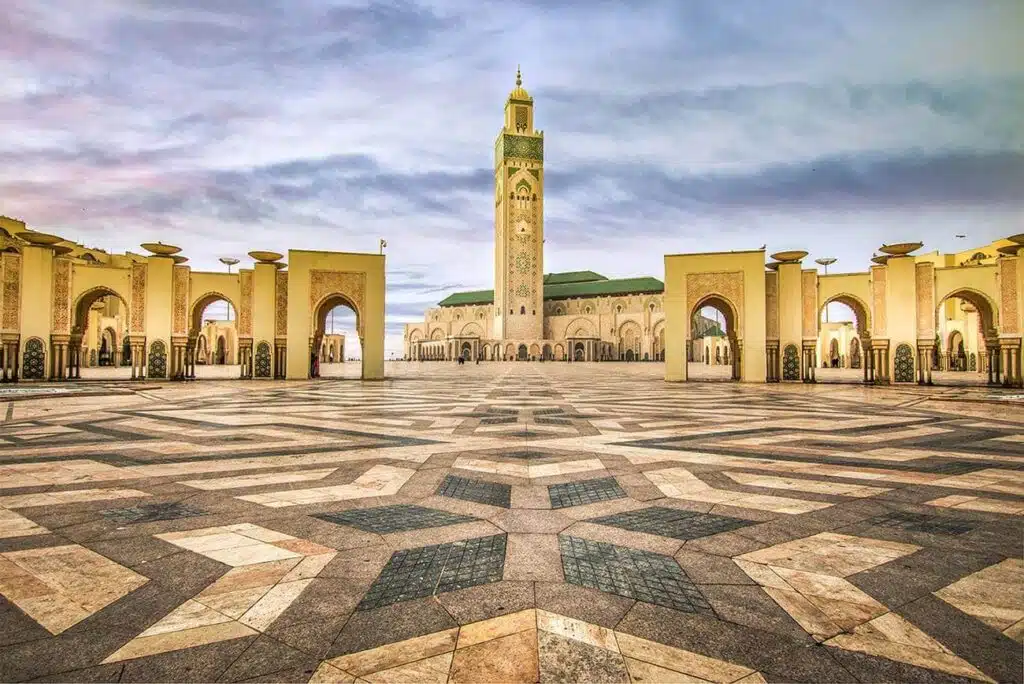
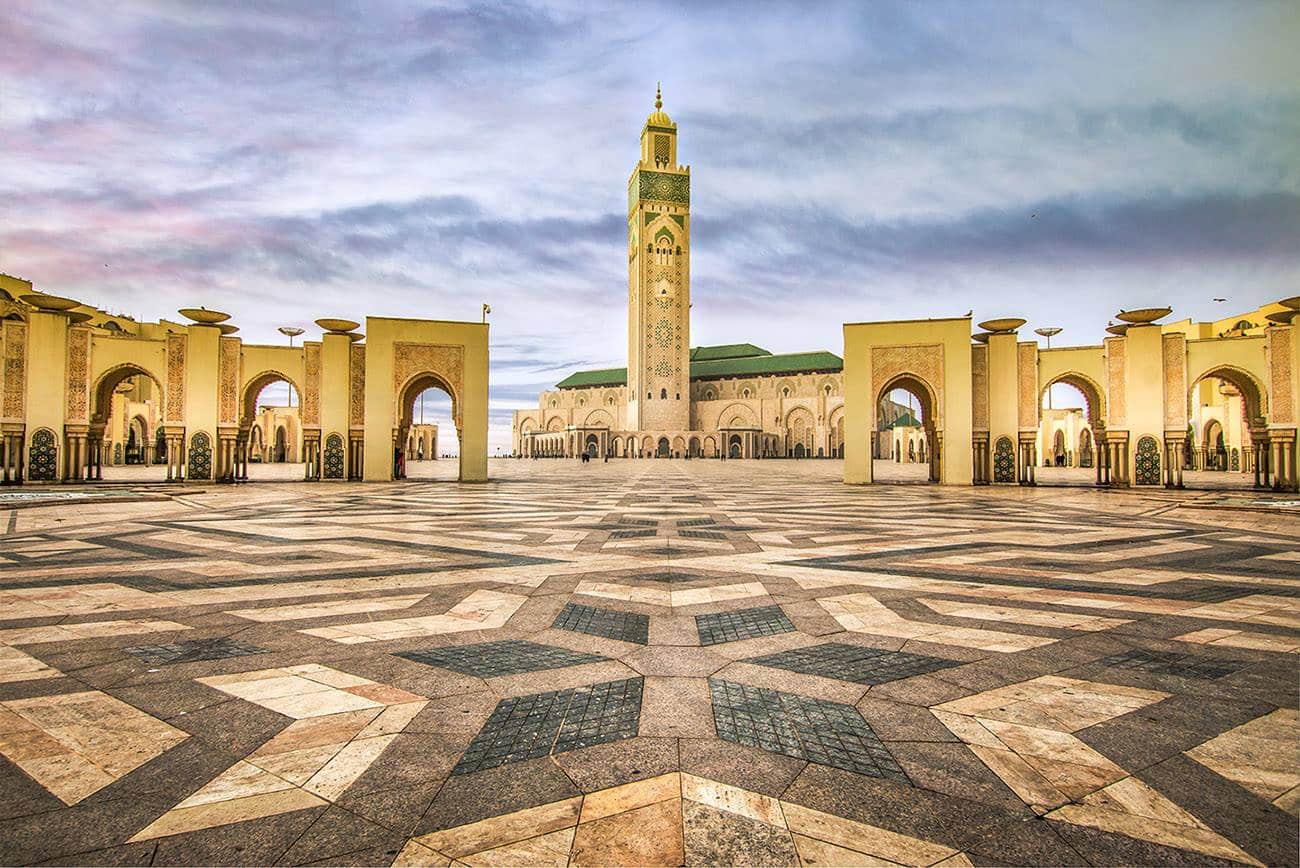
Hassan II Mosque is the city’s essential architectural visit.
Its Atlantic setting is impressive from outside, while an interior guided visit provides an opportunity to appreciate Moroccan decorative craftsmanship.
The mosque’s foundation operates paid guided visits and publishes seasonal schedules, prices, and visitor rules. Plan around those arrangements rather than assuming entry is available at any time.
Before your visit:
Use the official Hassan II Mosque visitor information when planning.
Habous is a rewarding area for browsing traditional goods and enjoying a neighborhood walk.
Look for books, leather goods, metalwork, pastries, and other Moroccan products. Ask about materials and workmanship before comparing prices.
Leave room for a café stop rather than treating the area only as a shopping opportunity.
Casablanca’s central streets reward travelers who enjoy buildings and urban history.
Look above the shopfronts for balconies, decorative façades, and changing architectural styles. A specialist guide can help explain how different periods shaped the city.
Choose a focused walking route rather than trying to photograph every building.
Include Mohammed V Square as part of a downtown architecture route.
Take time to appreciate the surrounding public buildings and how the space functions within the city.
Keep your visit flexible around local activity and any temporary restrictions.
The old medina adds another perspective to a Casablanca visit.
Explore selected commercial streets, observe daily activity, and keep your route manageable. If you prefer historical interpretation over shopping, explain that to your guide.
Ask before taking close photographs of residents or craftspeople.
The Ain Diab Corniche offers an Atlantic setting for a walk, meal, or relaxed break.
Choose your stop according to access, wind, shade, and the facilities you want. A sea-facing terrace may be appealing in photographs but less comfortable in strong wind.
Do not assume every stretch is equally suitable for swimming.
A park visit can provide a welcome pause between urban sightseeing stops.
Include it as part of a nearby route rather than making repeated cross-city transfers.
A short rest often improves the remainder of the day more than adding another hurried attraction.
Mahkama du Pacha is worth discussing with your guide if decorative architecture interests you.
Treat an interior visit as dependent on current permission and access arrangements. Do not build your entire schedule around unconfirmed entry.
The surrounding Habous visit remains worthwhile even if an interior visit is unavailable.
The Moroccan National Tourist Office identifies Habous, architectural sightseeing, parks, and Mahkama du Pacha among the city’s cultural interests. Casablanca shopping and neighborhood guide
Travelers with a second day can ask about current museum exhibitions and galleries that match their interests.
A focused cultural visit can add depth to the city’s architecture and community history.
Confirm current opening arrangements, particularly if you are visiting on a specific day or making a special journey.
Casablanca is a good place to make food part of the itinerary.
Choose according to the kitchen, menu, and location. A restaurant near your next stop may provide a more relaxed experience than crossing the city for every meal.
If a particular restaurant is important to you, confirm its opening hours and reservation arrangements directly.
For travelers arriving from the United States, the first day deserves a realistic pace.
Airport arrival procedures, luggage collection, transportation, and tiredness can all affect your plans.
A comfortable approach is to arrange your transfer, settle into your accommodation where possible, and choose one main activity.
If Hassan II Mosque is essential, allow another opportunity to visit rather than relying entirely on your arrival-day timing.
Confirm early check-in separately. Booking a hotel room does not automatically mean it will be ready when a morning flight arrives.
Casablanca offers opportunities to explore Moroccan cooking alongside seafood and contemporary menus.
Consider:
Ask whether seafood prices are per portion or by weight, and confirm which side dishes are included.
For dietary planning, read our guide to dietary restrictions in Morocco and explain your requirements before meals are arranged.
A central property can suit travelers interested in architecture, restaurants, and city sightseeing.
Ask about room noise, vehicle access, and the distance to your planned visits.
A coastal hotel may appeal if you want time beside the ocean.
Check transportation to other sights and whether your room faces a busy road, nightlife venue, or exposed seafront.
An airport-area stay may be practical for a short overnight connection or an early departure.
Compare the convenience with your sightseeing plans. A property chosen for airport access may require additional travel to reach city attractions.
Confirm:
Choose accommodation around the needs of your actual travel day.
Begin with a confirmed mosque visit.
Allow time to appreciate the exterior setting, complete entry procedures, and enjoy the guided experience.
Choose one main area according to your interests.
Architecture enthusiasts may prefer downtown, while travelers interested in crafts and traditional shopping may choose Habous.
Select a restaurant that fits your route and dietary preferences.
Avoid using the lunch break for another long transfer.
Choose the Corniche, a park break, or another cultural stop according to your energy.
Keep your return arrangements straightforward.
With a second day, divide the city into smaller experiences.
Use the first day for the mosque and a coastal meal. Reserve the second for a focused neighborhood walk, architecture, and a museum or gallery.
This pace leaves more room for rest and unexpected discoveries.
If you are adding an excursion outside Casablanca, allow separate time rather than compressing the same sightseeing into fewer hours.
Morocco’s capital, Rabat, is a natural destination to consider after Casablanca.
Choose between an excursion and an overnight stay according to the rest of your route. Discuss your main interests before deciding how many stops to include.
A journey to Marrakech adds historic palaces, gardens, and a different urban atmosphere.
Allow time to settle in after the transfer instead of scheduling every major visit on arrival.
Travelers interested in the north can build a staged itinerary toward Chefchaouen.
Plan appropriate overnight stops and compare the route with your available vacation days.
El Jadida can be considered for travelers interested in Atlantic coastal history.
Check current access to individual monuments before confirming a visit, especially if one particular interior is your main reason for going.
Casablanca can be the beginning of a wider private journey rather than only a short city stop.
Our Morocco tours from Casablanca provide a starting point for comparing routes and durations.
Our 12-day private Morocco tour from Casablanca combines major cities, an Atlantic excursion, mountain landscapes, and time around the Sahara dunes.
Read the day-by-day itinerary, then confirm the accommodation, meals, guiding, and admissions included in your quotation.
If the desert is a priority, explore our Morocco desert tours.
The Sahara requires a multi-day route from Casablanca. Choose an itinerary that accounts for travel between destinations and leaves time to enjoy the experience.
Our Morocco senior tours offer a starting point for discussing shorter walking sessions, rest breaks, and suitable accommodation.
Explain individual needs before selecting the route. Age alone does not determine the right pace.
Travelers interested in distinctive hotels and added comfort can explore our luxury Morocco tours.
Discuss room categories, locations, facilities, and inclusions. Comfort depends on those details as much as the property’s label.
Our Morocco LGBT tours provide a starting point for discussing accommodation preferences, privacy, and personalized travel arrangements.
Share your priorities during planning so we can discuss suitable options and local context.
Compare quotations by their inclusions, not only the total price.
Check accommodation categories, vehicle arrangements, local guides, meals, entrance fees, and airport transfers.
Our private Morocco tour cost guide explains how route length, accommodation, and included services affect the budget.
Where prices are shown in US dollars, confirm the currency used for your final quotation and payment.
Casablanca is a large city. Choose nearby sights for the same part of the day and allow for traffic.
Provide your flight details, accommodation name, passenger count, and luggage requirements.
Ask how to contact your driver if your arrival changes.
An English-speaking driver and a specialist sightseeing guide perform different roles.
Confirm who accompanies each visit and which services are included.
A light jacket is useful beside the ocean, especially when sitting outside.
Keep local currency available for smaller purchases and places where card payment is unavailable.
Ask about walking distances, steps, vehicle drop-off points, and seating opportunities.
A route designed around your needs is more useful than a general promise of accessibility.
Start with your arrival details, available time, and the experiences that matter most to you.
Whether you want a city introduction, a comfortable arrival day, or a longer journey through Morocco, we can discuss a route that fits your plans.
Browse the Casablanca tours on this page and contact Gboo Morocco Tours to plan your private journey.
Yes, particularly for Hassan II Mosque, architecture, coastal neighborhoods, and an introduction to contemporary Moroccan urban life.
One full day provides a useful introduction. Two days allow a more relaxed visit with additional cultural stops.
Yes, through the mosque’s official visitor arrangements. Check the current schedule, ticketing, and rules before visiting.
Spring and early fall are useful starting choices for sightseeing. Consider your wider Morocco route when choosing dates.
No. Rabat is the capital.
Yes, as part of a multi-day itinerary. Allow realistic travel stages between the city and desert.
It can be, with appropriate transportation, accommodation, and sightseeing pace. Discuss individual walking and access needs before booking.
Keep arrival-day plans flexible. A transfer, rest, and one main activity often provide a more comfortable beginning.
No, but a well-planned private visit can help connect different districts and provide historical context.


