
10-Day Casablanca Desert Tour
Experience Morocco from the Atlantic coast to the golden dunes…
View the Tour

Marrakech is a historic imperial city in Morocco, celebrated for its ochre-colored medina, traditional markets, ornate palaces, peaceful gardens, and lively Jemaa el-Fna square. Near the High Atlas Mountains, it is an excellent base for cultural sightseeing, Atlantic coast excursions, and multi-day Sahara Desert tours.
Browse our Marrakech tours to find your preferred route, then use the guide below to plan when to visit, what to see, and how much time to allow.





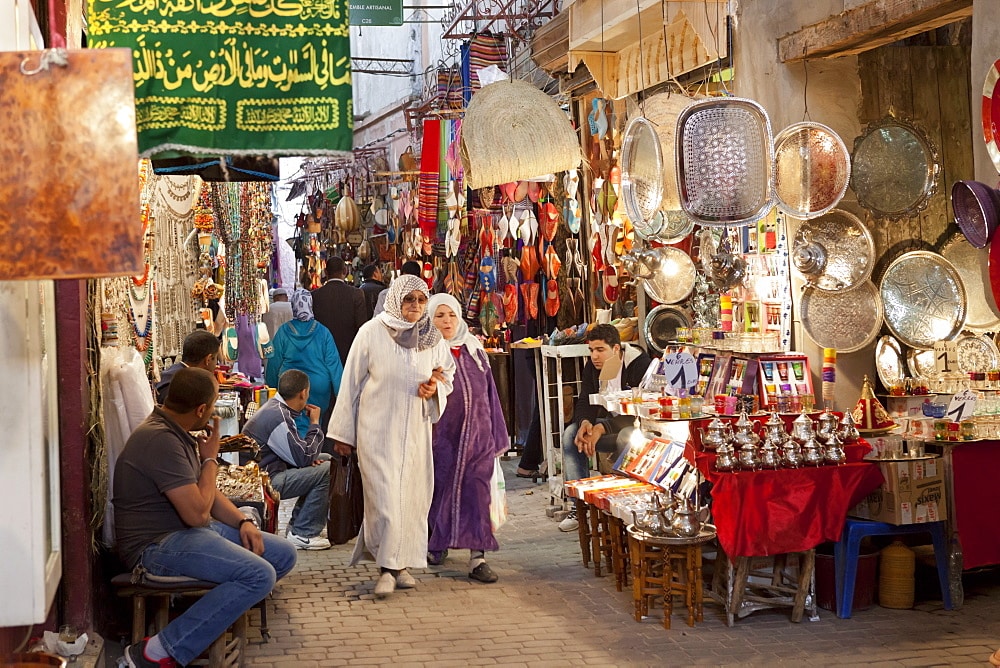
Marrakech is a city to experience with all your senses. You hear the rhythm of a workshop before seeing the craftsperson, smell bread as it leaves a neighborhood oven, and step from a busy alley into the calm of a courtyard.
For a first visit, the most useful advice is to avoid filling every hour. Choose a few important sights each day and leave room for the moments between them. A conversation over mint tea or an unhurried lunch can be as memorable as a famous monument.
This Marrakech travel guide brings together the main attractions, monthly weather, seasonal advice, neighborhood recommendations, and practical tips for planning a comfortable stay.
| Planning question | Local planning advice |
|---|---|
| Where is Marrakech? | Inland in western Morocco, near the foothills of the High Atlas Mountains |
| What is Marrakech famous for? | Its historic medina, souks, palaces, gardens, traditional riads, and Jemaa el-Fna |
| How many days should you stay? | Allow three full days for an introduction, with extra days for excursions |
| When is the best time to visit? | Spring and fall generally offer comfortable conditions for sightseeing |
| Where should you stay? | The medina for atmosphere; Guéliz or Hivernage for easier vehicle access and larger hotels |
| Is the Sahara nearby? | Visiting Merzouga and Erg Chebbi requires a multi-day journey |
| What temperature units are used here? | Fahrenheit first, followed by Celsius |
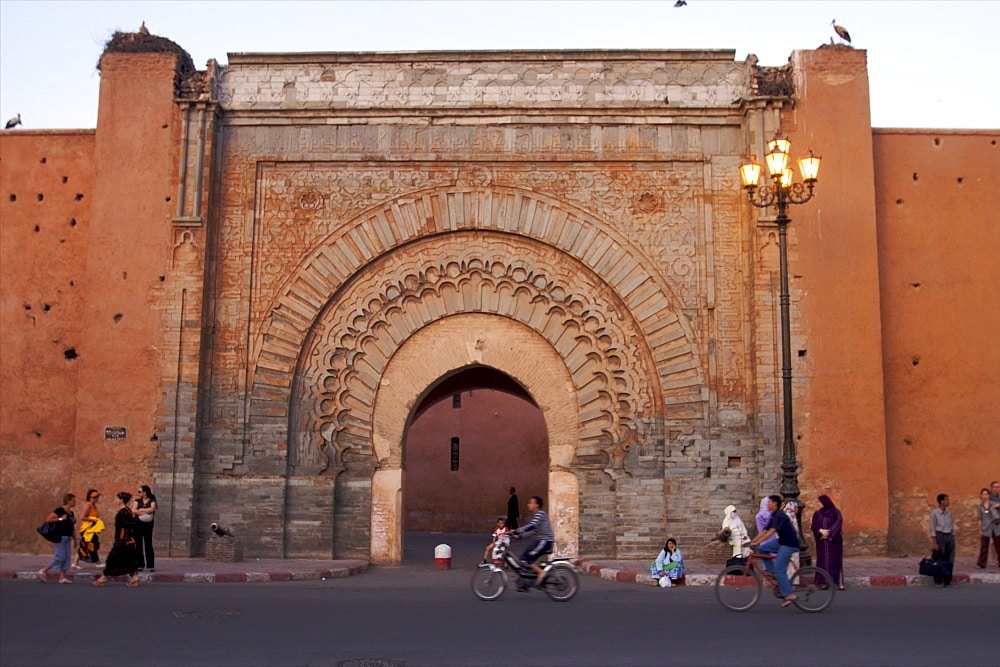
Marrakech offers an engaging introduction to Morocco’s architecture, craftsmanship, food, and hospitality.
Within its historic walls, homes, markets, workshops, and monuments form a living neighborhood. Outside the medina, contemporary districts reveal another side of the city through cafés, galleries, restaurants, and modern hotels.
UNESCO recognizes the medina for its architectural and cultural importance, including its historic monuments, gardens, and urban heritage. Read UNESCO’s Marrakech overview.
Marrakech also connects naturally with other Moroccan destinations. You can combine it with Essaouira for an Atlantic coast stay, the Atlas Mountains for mountain scenery, or Merzouga and Erg Chebbi for a Sahara experience.
For travelers who want to spend substantial time walking, March through April and October through November are useful starting choices. May and September can also be rewarding if you are comfortable with warmer weather.
The right season depends on your priorities. A trip focused on medina walks requires a different schedule from a relaxed hotel stay with a pool and evening outings.
Spring is a good season for combining gardens, monuments, outdoor meals, and neighborhood walks.
Average daytime highs rise from about 74°F (24°C) in March to 85°F (29°C) in May. Evenings are cooler, especially early in the season.
Bring light layers and comfortable walking shoes. A small umbrella or light rain jacket can also be useful.
Summer sightseeing calls for an early start and a slower afternoon.
July and August average daytime highs reach approximately 99–100°F (37–38°C). Individual days can be hotter than the monthly averages.
Plan outdoor visits in the morning, take a generous midday break, and return to exploring later. When booking a riad, confirm that your room has air conditioning.
September often retains summer warmth, with an average daytime high of approximately 91°F (33°C).
October and November bring milder conditions that can be more comfortable for walking. Pack layers as nighttime temperatures fall, and allow flexibility for occasional rain.
Fall is also worth considering for a longer itinerary connecting Marrakech with other inland destinations.
Winter can suit visitors who prefer cooler sightseeing weather.
Average daytime highs are approximately 66–69°F (19–21°C), while average nighttime lows range from about 43–46°F (6–8°C).
Bring a warm layer for mornings and evenings. Ask your accommodation about room heating, especially when choosing a traditional riad.
These figures are climate averages for Marrakech station for 1991–2020. They describe typical conditions, not a forecast or temperature extremes.
| Month | Average daytime high | Average nighttime low | Average rainfall |
|---|---|---|---|
| January | 66°F / 19.1°C | 43°F / 5.9°C | 1.0 in / 25.0 mm |
| February | 69°F / 20.7°C | 46°F / 7.6°C | 1.0 in / 25.7 mm |
| March | 74°F / 23.6°C | 51°F / 10.3°C | 1.4 in / 35.3 mm |
| April | 78°F / 25.7°C | 54°F / 12.4°C | 1.0 in / 26.3 mm |
| May | 85°F / 29.4°C | 59°F / 15.2°C | 0.4 in / 10.3 mm |
| June | 92°F / 33.6°C | 64°F / 17.9°C | 0.1 in / 3.1 mm |
| July | 100°F / 37.7°C | 69°F / 20.6°C | 0.1 in / 2.2 mm |
| August | 99°F / 37.4°C | 70°F / 21.1°C | 0.2 in / 4.7 mm |
| September | 91°F / 32.5°C | 65°F / 18.6°C | 0.6 in / 15.2 mm |
| October | 83°F / 28.5°C | 60°F / 15.7°C | 0.8 in / 19.1 mm |
| November | 74°F / 23.1°C | 51°F / 10.7°C | 1.2 in / 29.8 mm |
| December | 68°F / 20.2°C | 45°F / 7.3°C | 1.0 in / 24.2 mm |
Fahrenheit and inch values are rounded conversions. Source: World Weather Information Service, Marrakech.
Use these averages to choose a season, then check the forecast before departure. Marrakech weather does not describe conditions at a High Atlas mountain pass or a Sahara campsite.
A well-balanced visit combines historic buildings, gardens, neighborhood walks, and cultural experiences. Choose according to your interests rather than trying to visit every sight.
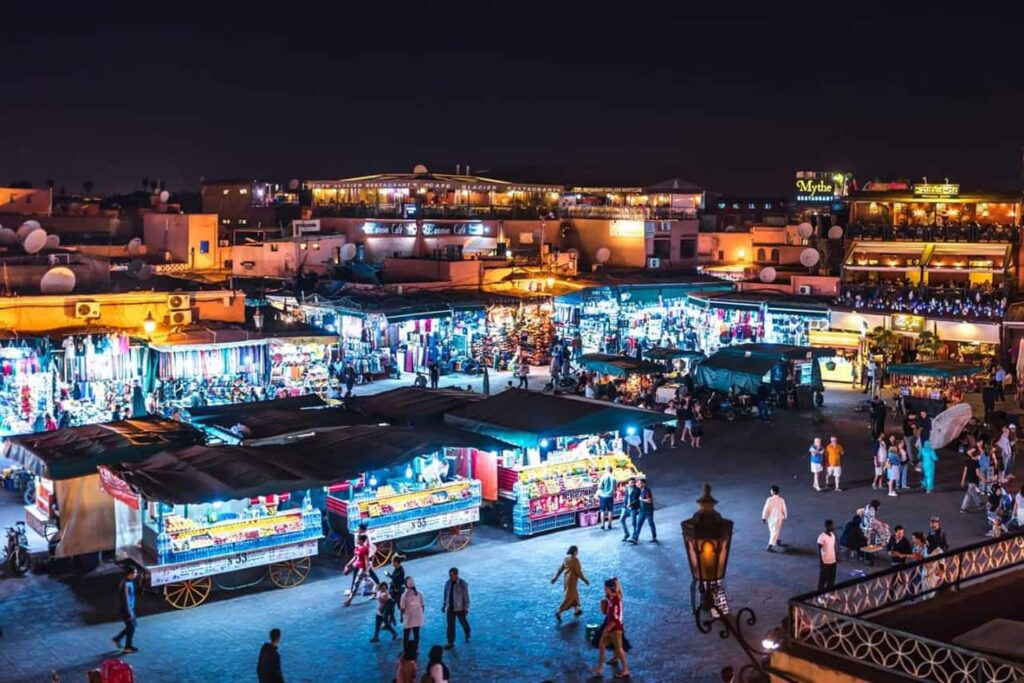
Jemaa el-Fna is Marrakech’s best-known square and a natural starting point for exploring the old city.
Visit during the day to understand its layout, then return toward evening to experience a different atmosphere. A terrace overlooking the square offers a comfortable place to pause and watch the activity below.
Check the menu before ordering and ask whether a particular table has a minimum spend. Before photographing performers or taking close portraits, request permission and agree on any payment.

Marrakech’s souks introduce visitors to Moroccan craftsmanship through leather goods, woven textiles, ceramics, woodwork, and metalwork.
Take time to compare materials and workmanship. Ask how an item was made and where it comes from, rather than judging only by its appearance.
Bargaining is best approached as a polite conversation. Agree clearly on the final price and currency, including any packing or shipping arrangements.
For your first morning, a local guide can help explain the layout, history, and craft traditions while tailoring the walk to your interests.

The Koutoubia minaret is one of Marrakech’s defining landmarks and a useful reference point when navigating the city.
Include its surroundings in a walk near Jemaa el-Fna. Notice the building’s proportions and its relationship with the surrounding streets.
It remains an active religious site, so respect worshippers’ space and follow posted access rules.

Bahia Palace is an opportunity to appreciate Moroccan decorative architecture through courtyard design, tilework, carved details, and painted ceilings.
Look closely rather than moving quickly between rooms. The arrangement of light, shade, materials, and decorative patterns is part of the experience.
Combine the visit with nearby southern medina neighborhoods, leaving room for a lunch or café break.
El Badi offers a contrasting royal setting, with broad spaces and surviving ruins that suggest the scale of the former palace.
It is especially interesting for visitors who enjoy architecture and historical interpretation.
Exposed areas can feel hot, so bring water and sun protection and consider an earlier visit during warmer months.
The Saadian Tombs reward visitors interested in royal history and detailed architectural decoration.
Allow flexibility for queues and combine the visit with nearby sights rather than making repeated journeys across the city.

Ben Youssef Madrasa is one of Marrakech’s important historic educational buildings.
Look beyond the central courtyard to understand how the spaces were used. The contrast between elaborate communal areas and restrained student accommodation gives the building depth.
A knowledgeable guide can explain its educational role and the significance of its architectural details.
These major monuments form part of Marrakech’s documented architectural heritage. UNESCO’s destination listing
Jardin Majorelle appeals to visitors interested in plants, color, design, and photography.
Plan your visit around the ticket you actually want. Admission to the garden and associated museums may involve different ticket options.
Use the ticket link provided by the official Jardin Majorelle website, and check your selected date, entry time, and included sites.
Avoid scheduling a demanding medina walk immediately afterward if you would prefer a relaxed morning.
The Pierre Bergé Museum of Berber Arts and Musée Yves Saint Laurent Marrakech offer additional cultural interests alongside a garden visit.
Choose according to your preferences and check ticket coverage and opening arrangements through the official website.
Menara provides a more open landscape than the medina.
Approach it as a place to walk, look across the basin, and appreciate Marrakech’s setting. Mountain views depend on visibility, so consider them a welcome possibility rather than a guaranteed feature.
Time outside the historic walls gives a fuller impression of Marrakech.
Guéliz and Hivernage introduce contemporary restaurants, cafés, shops, and hotels. They can provide a welcome change after several hours in narrow market streets. Moroccan National Tourist Office’s Marrakech guide
With additional time, consider Maison de la Photographie, Le Jardin Secret, Dar El Bacha, or a walk through the Mellah and Kasbah districts.
Choose places that complement your interests. Check current opening arrangements before making a special journey.
A cooking class can offer a practical introduction to ingredients, spices, and meal preparation.
Ask whether it includes market shopping, hands-on cooking, and a shared meal. Explain dietary preferences or restrictions before booking.
Hammam experiences range from neighborhood bathhouses to private spas.
Ask what is included, whether treatments are shared or private, what you should bring, and how long to allow. Choose the setting that matches your comfort level.
Where workshops welcome visitors, ask about the process behind the finished object.
Request permission before taking photographs, keep entrances clear, and avoid touching tools or unfinished work without an invitation.
A memorable Marrakech meal does not need to include an elaborate setting.
Make room for a neighborhood restaurant, a carefully prepared lunch, or tea in a calm courtyard. Leaving time to enjoy your food often improves the whole day’s pace.
Marrakech is particularly associated with tanjia, a slowly cooked meat dish. The Moroccan National Tourist Office highlights it as a characteristic local food experience. Official Marrakech destination guide
Other dishes to consider include:
Vegetarian travelers should ask about broth and cooking ingredients rather than relying solely on a dish’s name.
A riad in the medina suits travelers who enjoy traditional architecture and exploring on foot.
Before booking, ask about:
For travelers with limited mobility, these details matter more than photographs of the courtyard.
Guéliz is worth considering if you prefer wider streets, contemporary businesses, and straightforward taxi access.
It can suit visitors who want to experience the medina while staying outside it.
Hivernage may appeal to travelers looking for larger hotels, pools, and a more conventional hotel setting.
Choose accommodation around your preferred daily routine, including how often you want to return for breaks.
Three full days offer a useful introduction. Adjust this suggested itinerary around opening days, ticket availability, weather, and your walking comfort.
Begin with a guided introduction to the medina and selected craft areas.
Take a proper lunch break, visit the Koutoubia surroundings, and leave time to relax before returning to Jemaa el-Fna toward evening.
The aim is to become comfortable with the city rather than cover every market street.
Choose two or three visits from Bahia Palace, El Badi Palace, and the Saadian Tombs.
Combine these with nearby neighborhood walks. Keep the later afternoon available for a hammam, a café stop, or time at your accommodation.
Visit Jardin Majorelle if it interests you, adding an associated museum according to your chosen ticket.
Spend the rest of the day on something personal: photography, cooking, shopping, another cultural stop, or contemporary Marrakech.
For an excursion outside the city, add a fourth day rather than compressing the same visits into a shorter schedule.
For a change of scenery, consider Essaouira.
Allow a full day for an excursion, including the journey. If you prefer organized transportation, explore our Day Trip to Essaouira from Marrakech.
A longer coastal stay may suit travelers who want more time to explore at an easy pace.
An excursion into the Atlas Mountains can add mountain landscapes and village visits to your trip.
Before booking, ask about driving time, walking distance, terrain, elevation, and guide arrangements.
Describe your walking preferences clearly. A scenic outing and a demanding mountain hike require different planning.
Aït Ben Haddou and Ouarzazate can be included in a longer southern itinerary.
Compare the time spent traveling with the time available for sightseeing before choosing a route. An overnight journey may provide a more comfortable pace than a long return excursion.
Merzouga and the Erg Chebbi dunes require several days from Marrakech.
For travelers continuing north, our 3-Day Marrakech to Fes Desert Tour via Merzouga connects Marrakech with southern landscapes, a desert stay, and Fes.
Read the day-by-day itinerary and consider the driving involved. Ask about a longer version if you prefer additional stops and a slower journey.
Check prices in Moroccan dirhams and confirm the currency before agreeing to a service.
For smaller purchases and situations where cards are unavailable, keeping some local cash is useful. If you compare costs in US dollars, use a current exchange rate when planning.
Choose nearby attractions for the same morning or afternoon.
Repeated transfers can make a day feel busy without adding much sightseeing. A neighborhood-based route leaves more time for enjoying each visit.
Before booking, check transportation, accommodation, meals, entrance fees, and guiding arrangements.
A driver and a specialist city guide perform different roles. Ask who will accompany each part of your visit and which services are included.
Confirm the cost and scope before accepting guiding, transportation, photographs, or other paid services.
Clear arrangements make the experience more comfortable for everyone.
Bring comfortable shoes, sun protection, a reusable water bottle, and layers appropriate to your dates.
In winter, include a warm evening layer. In summer, breathable clothing and reliable room cooling deserve particular attention.
Medina streets may include uneven paving, narrow passages, and limited vehicle access. Traditional accommodation may have stairs.
Tell your tour organizer about walking limits, mobility needs, and preferred rest breaks before confirming the itinerary.
Ask before taking close photographs of people. Keep residential doorways clear and remember that the medina is a working neighborhood as well as a visitor destination.
A rewarding Marrakech stay gives you time to understand what you are seeing and enjoy the people, food, and places along the way.
Start with your interests, travel dates, and preferred pace. Then choose whether Marrakech will be a city break, the beginning of a Sahara journey, or one stop on a wider Moroccan itinerary.
Explore the tours on this page or contact Gboo Morocco Tours to discuss a private itinerary built around your plans.
Three full days is a useful starting point for a first visit. Four or five days allows more downtime or an excursion without rushing the main city sights
Spring and fall generally offer a comfortable balance for sightseeing. April and October are useful starting choices, depending on your preferred temperature and itinerary.
July and August average daytime highs are approximately 99–100°F (37–38°C). Plan outdoor visits early and late, and allow a substantial midday break.
Winter days can be mild, but evenings and mornings are cooler. January averages about 66°F (19°C) during the day and 43°F (6°C) at night.
A guide is optional, but a guided introduction can help explain the medina’s history, architecture, and craft traditions. Agree on your interests, pace, duration, and price beforehand.
Merzouga and the Erg Chebbi dunes require a multi-day journey. Choose an itinerary that clearly explains distances, driving time, and overnight stops.
It can be, with suitable accommodation and a realistic pace. Discuss stairs, uneven surfaces, walking distances, vehicle access, and rest breaks before booking.
Check each attraction’s own arrangements. For Jardin Majorelle, use the official website to access its ticket service and confirm the sites included in your booking.

